

Staying Safe: Everyones Job
Guilford Fire Phone Contacts
Emergency: 911
Non Emergency Fire Dispatch: 203-453-8448
Fire Headquarters: 203-453-8056
Utility Companies
Eversource: 800-286-2000
United Illuminating: 1-800-722-5584
Connecticut Natural Gas (Gas Leaks): Contact 911
Propane Leaks: Contact 911
Non Emergency Phone Contacts
Guilford Police Non-Emergency: 203-453-8061
Guilford Fire Non-Emergency: 203-453-8000
Guilford Animal Control: 203-453-8083
The best way to reduce the risk of fire and other emergencies is through preparation, awareness, and prevention. The Guilford Fire Department is committed to helping residents, businesses, and visitors stay safe by providing practical fire and life safety information. Whether you're creating a home escape plan, installing smoke and carbon monoxide alarms, practicing safe cooking habits, or preparing for severe weather, taking simple steps today can help protect lives and property tomorrow. Explore the resources below to learn how you can make your home, workplace, and community safer.
-
Any time is the right time to create and practice your family's home escape plan. Start by drawing a map of your home that shows all doors and windows. Every family member should know at least two ways out of each room whenever possible, in case the primary exit is blocked by smoke or fire.
Choose a designated outdoor meeting place a safe distance from your home where everyone will gather after escaping. This allows you to quickly account for all family members and provide important information to first responders.
Once you're out, stay out. Never re-enter a burning building for any reason.
The most important part of a home escape plan is practice. Conduct a family fire drill at least twice each year so everyone knows what to do in an emergency.
If you have questions about creating a home escape plan or would like additional fire safety information, please contact the Guilford Fire Department Fire Marshal's Office at firemarshal@guilfordfire.com or 203-453-8056.
-
The Guilford Fire Department Fire Marshal's Office conducts fire inspections for homes, businesses, and other occupancies throughout the community. Whether you are scheduling a routine inspection, preparing for a property sale, opening a new business, or addressing a fire safety concern, our team is here to help ensure your property meets applicable fire and life safety requirements. Use the information below to prepare for your inspection and help make the process as efficient as possible.
Before your inspection
Ensure all areas of the property are accessible.
Have any relevant permits, plans, or documentation available if applicable.
Make sure smoke and carbon monoxide alarms are installed and operational.
For businesses, ensure fire protection systems (alarms, sprinklers, extinguishers) are maintained and ready for inspection.
-
As temperatures drop, heating equipment becomes one of the leading causes of home fires. Whether you use a furnace, wood stove, pellet stove, fireplace, or portable space heater, taking a few simple precautions can help keep your family safe. Keep anything that can burn at least three feet away from heating equipment, have your heating system inspected and serviced annually, and test smoke and carbon monoxide alarms regularly. By practicing safe heating habits and maintaining your equipment, you can reduce the risk of fire and enjoy a safe, warm season.
-
Carbon monoxide (CO) is an odorless, colorless gas that can quickly become dangerous inside a home or business. During the winter months, heating equipment, generators, fireplaces, and vehicles can all produce carbon monoxide if they are not used properly. Taking a few simple precautions can help protect your family from CO poisoning.
Never run a vehicle inside a garage, even if the garage door is open. If warming up your vehicle, move it completely outdoors and ensure the exhaust pipe is clear of snow, ice, or other obstructions. After snowstorms, check that furnace, dryer, fireplace, and stove vents remain free of snow and debris to allow proper ventilation.
Portable generators should only be operated outdoors in a well-ventilated area, away from doors, windows, and air intakes. Likewise, gas and charcoal grills should never be used indoors, in garages, or on enclosed porches.
Have furnaces, boilers, fireplaces, wood stoves, and chimneys inspected and serviced annually by a qualified professional. Always open the fireplace damper before using a fireplace, and never use an oven or stove to heat your home.
Every home should have carbon monoxide alarms installed outside sleeping areas and on every level of the residence. Interconnected alarms provide the highest level of protection by sounding throughout the home when one alarm detects carbon monoxide. Test alarms monthly, replace batteries as needed, and replace the alarm unit according to the manufacturer's recommendations.
If a carbon monoxide alarm sounds, move everyone to fresh air immediately. Go outdoors or near an open door or window, call 911 from a safe location, and remain outside until emergency personnel determine it is safe to re-enter the building.
Protect your family year-round by maintaining your fuel-burning appliances and ensuring your home is equipped with working carbon monoxide alarms.
-
Working smoke alarms and carbon monoxide (CO) alarms are your first line of defense against fire and carbon monoxide emergencies. Carbon monoxide is an odorless, colorless gas often called the "invisible killer" because it cannot be seen, smelled, or tasted. Common sources of carbon monoxide in the home include furnaces, boilers, fireplaces, wood stoves, generators, and fuel-burning cooking appliances.
Install smoke alarms on every level of your home, inside each bedroom, and outside all sleeping areas. Carbon monoxide alarms should be installed on every level of the home and outside sleeping areas. For the highest level of protection, use interconnected alarms so that when one alarm activates, all alarms throughout the home sound.
Test all smoke and carbon monoxide alarms at least once each month and replace batteries as needed. Follow the manufacturer's instructions for installation, maintenance, and replacement of alarm units. Be familiar with the sounds your alarms make and know the difference between an emergency alarm and a low-battery warning.
If a smoke alarm sounds, get outside immediately and stay outside. If a carbon monoxide alarm sounds, move everyone to fresh air right away and call 911 from a safe location. Never ignore an alarm. Early warning from properly maintained alarms can save lives by providing the time needed to escape and call for help.
The Guilford Fire Department encourages every household to regularly test their alarms and replace aging units to ensure continuous protection for your family.
-
Cooking is one of the leading causes of home fires, making kitchen safety an important part of protecting your family and property. Most cooking fires can be prevented by staying attentive, maintaining a clean cooking area, and keeping combustible materials away from heat sources.
Always remain in the kitchen when cooking on the stovetop and check food regularly when using the oven. Keep towels, potholders, paper products, food packaging, and other combustible items away from burners and cooking surfaces. Establish a three-foot safety zone around the stove to keep children and pets at a safe distance. Older children should only cook with the permission and supervision of a responsible adult.
When cooking, keep a lid or baking sheet nearby that can be used to safely smother a small pan fire if needed.
If a stovetop cooking fire occurs, remain calm. Carefully slide a lid over the pan from the side to smother the flames and turn off the burner. Leave the lid in place until the pan has completely cooled. Never move a burning pan, carry it outside, or place it in a sink, as this can cause the fire to spread or result in serious burns.
If the fire grows beyond the pan or you do not feel comfortable extinguishing it, evacuate the home immediately, close the door behind you if possible, and call 911 from a safe location.
The Guilford Fire Department encourages all residents to practice safe cooking habits and ensure their homes are equipped with working smoke alarms to provide early warning in the event of a fire.
-
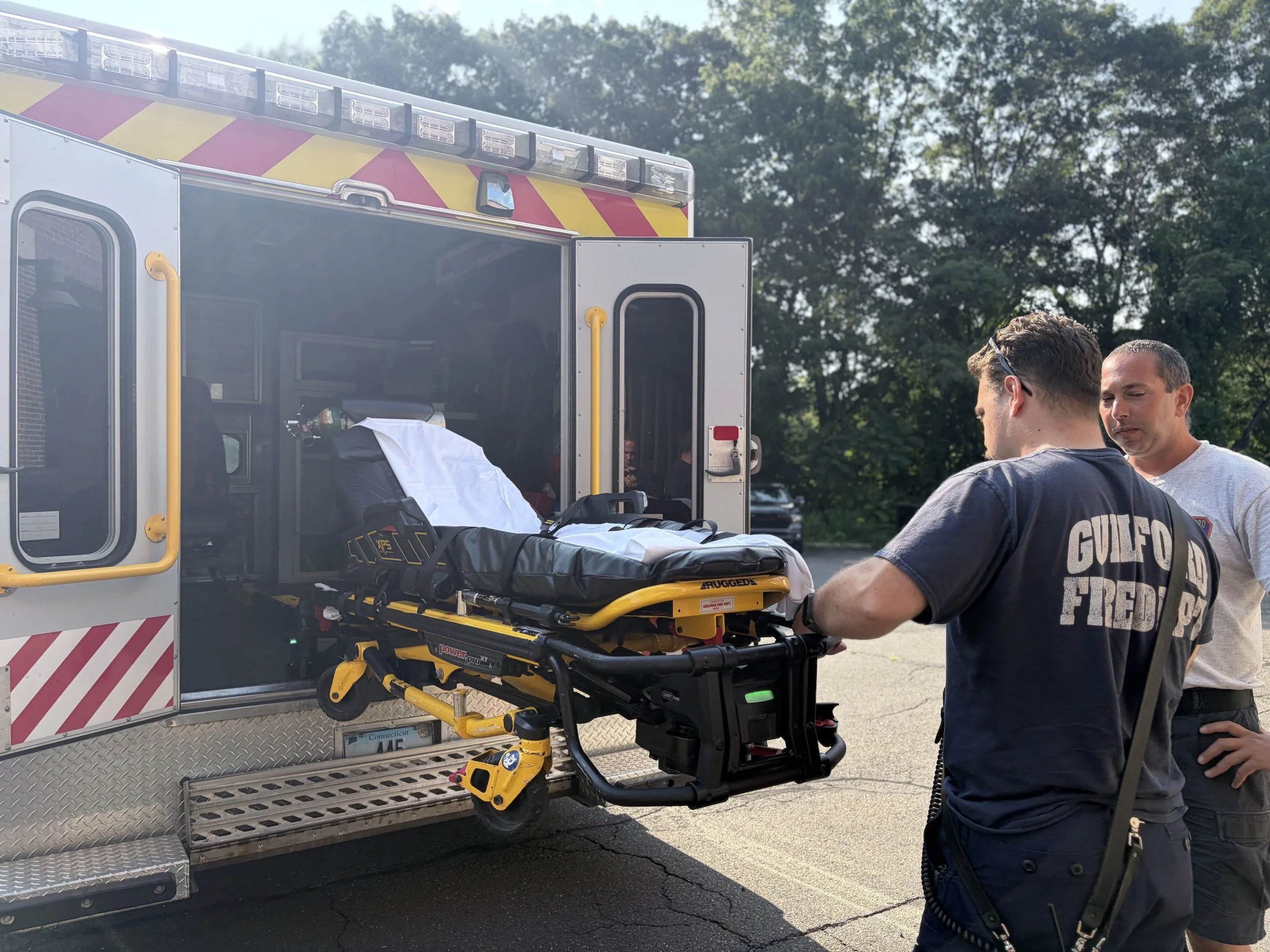
An ambulance soars past traffic, sirens screaming and light flashing, the medical technicians race toward the home of a senior citizen.
When they arrive, the senior is unconscious and they have little to go on. does he have any existing conditions? Is he taking any medication? Does he have allergies?
This frightening scenario is all too common for senior citizens and the Emergency Medical Personnel who treat them. That's why the File of Life, a mini medical history posted on the outside of one's refrigerator, was developed and is being promoted by local Councils on Aging and TRIAD (Lawmen and Seniors Working Together).
The File of Life card enables medical personnel to obtain a quick medical history when a patient is unable to offer one. "The card eliminates the risk of a patient, in a frightened state, forgetting to mention something important, " said M. G. Ishler, Director of the Sought Hadley, Mass, Council on Aging.
The card, which is kept in a red plastic pocket labeled File of Life, lists the patient name, emergency medical contact, insurance policy, social security number, health problems, medications, dosages, allergies, recent surgery, religion and a health care proxy. The entire pocket is held with a magnet to the outside of the refrigerator.
The File of Life idea was born in Bridgeport, Conn. a few years ago in slightly form as the Vial of Life which was kept inside the refrigerator, Ishler said. But the small vial, with a small piece of paper containing medical information inside of it, absorbed moisture so the information became unreadable, in addition to getting lost. "The EMTs don't have time to clean out the refrigerator to find the vial" said Ishler, who helped organize the program.
The File of Life pockets and files are distributed by Guilford FIre Department. If you or someone you know needs a File Of Life, Please contact Captain Andrew Hastings at Fire Headquarters at 203-453-8056.
-
Fire Extinguisher Planning, Placement, and Use
Fire extinguishers can be an important tool for preventing a small fire from becoming a major emergency, but they should only be used when it is safe to do so. Every household should have a fire safety plan that includes the proper selection, placement, and use of fire extinguishers.
The Guilford Fire Department recommends keeping multipurpose ABC-rated fire extinguishers in key areas of the home, including the kitchen, garage, workshop, and near utility or mechanical rooms. Extinguishers should be mounted in visible, easily accessible locations and kept out of the reach of young children. Never place an extinguisher so close to a potential fire hazard that you would have to move through flames to reach it.
All family members who are old enough should know where fire extinguishers are located and understand how to use them. Remember the PASS method:
Pull the pin.
Aim at the base of the fire.
Squeeze the handle.
Sweep from side to side.
Before attempting to use a fire extinguisher, make sure the fire is small, contained, and that you have a clear escape route behind you. If the fire is growing, producing significant smoke, or you feel uncomfortable fighting it, leave the building immediately and call 911.
Fire extinguishers should be inspected regularly to ensure they are fully charged, free from damage, and readily accessible. Replace or service extinguishers according to the manufacturer's recommendations.
Most importantly, every family should have and practice a home fire escape plan. Fire extinguishers are intended for small, early-stage fires—your first priority in any fire emergency is to get everyone out safely and call for help.
-
The Guilford Fire Department is committed to providing professional fire protection and emergency services to the community. The information below is provided as a general reference for insurance carriers, property owners, and other organizations seeking operational details about the department.
ISO Public Protection Classification (PPC): 3XY
Department Staffing
43 Career Firefighters
61 Volunteer Firefighters
Fire Apparatus Pumping Capacity
The department's frontline fire apparatus have an average pumping capacity of 1,500 gallons per minute (GPM), providing substantial fire suppression capabilities throughout the community.Fire Stations
5 Fire Stations strategically located throughout Guilford
Portable Water Supply Capacity
The department maintains a significant portable water supply for incidents occurring in areas without immediate hydrant access:2 Water Tankers – 3,500 gallons each
4 Engine Companies – 1,000 gallons each
1 Ladder Truck – 500 gallons
Total Portable Water Capacity:11,500 gallons
Through a combination of career and volunteer personnel, modern apparatus, and strategically located fire stations, the Guilford Fire Department provides comprehensive fire protection and emergency response services to the residents, businesses, and visitors of Guilford.